_edited_e.png)
In my own little heaven


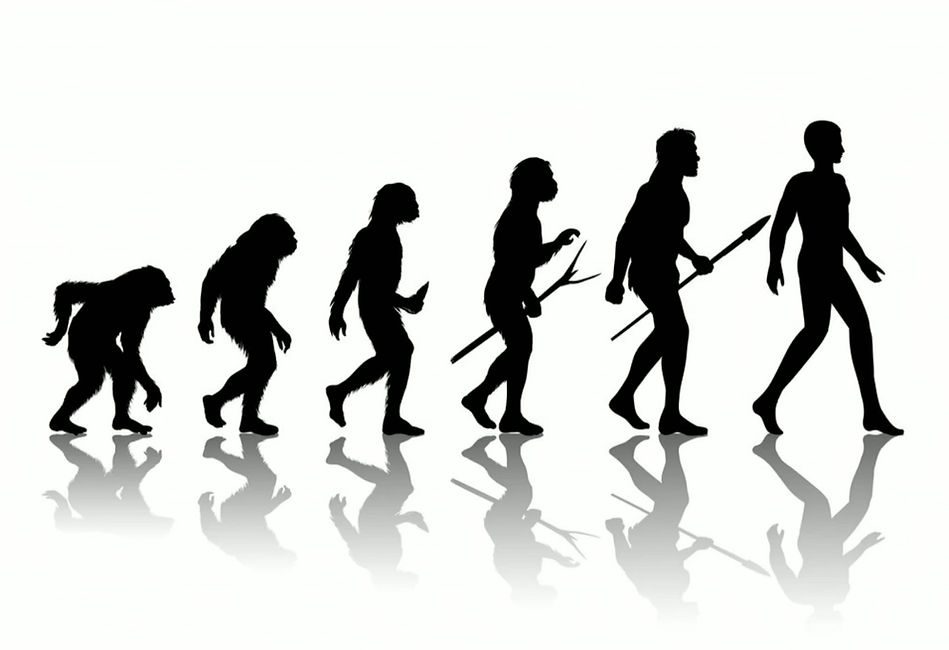
The evolution of man is a complex, branching process covering approximately 6 to 7 million years.
It describes the transition from ancient primate ancestors to modern Homo sapiens through significant physical and behavioral adaptations.
Scientists typically categorize it into several major stages:
Early Hominins (7–4 Million Years Ago): The lineage split from the ancestors of chimpanzees in Africa. Species like Sahelanthropus tchadensis and Ardipithecus began showing signs of bipedalism (walking on two legs).
Australopithecus (4–2 Million Years Ago): Best known from the "Lucy" fossil, these ancestors were fully bipedal but retained small, ape-like brains.
Homo habilis (2.4–1.4 Million Years Ago): Known as the "handy man," this was the first species in the genus Homo to be definitively associated with the use of stone tools.
Homo erectus (1.9 Million–110,000 Years Ago): These ancestors were the first to migrate out of Africa into Eurasia.
They mastered the use of fire, developed more complex tools, and had significantly larger brains than their predecessors.
Homo neanderthalensis (400,000–40,000 Years Ago): Specialized for cold climates in Europe and Asia, Neanderthals had large brains and complex social structures, including burying their dead. Modern humans share a small percentage of DNA with them due to ancient interbreeding.
Homo sapiens (300,000 Years Ago–Present): Anatomically modern humans emerged in Africa and eventually spread worldwide. They are characterized by a high, vaulted skull, a flat forehead, a prominent chin, and the capacity for complex language, art, and advanced technology.